


Friday, November 13, 2026
On Tap Today
False truth: AI has a ground-truth problem that needs an intelligence layer that can decide which data can be trusted.
Foundation failure: A fatal Brooklyn collapse prompts the city to audit 100 related construction sites.
Nonprofit motive: New York's new law grants nonprofits first refusal rights on 2,100 multifamily buildings.
| Daily Market Snapshot | ||
|---|---|---|
| S&P 500 | 7,592.40 | −26.98 (−0.35%) |
| FTSE Nareit All Equity REITs | 848.35 | −4.86 (−0.57%) |
| 10-Year Treasury | 5.10% | +12 bp |
| SOFR | 3.89% | +1 bp |
| S&P 500, REIT index and 10-Year Treasury as of market close November 12, 2026. Treasury change is versus November 10; U.S. bond markets were closed November 11 for Veterans Day. SOFR reflects the November 10 trade date. | ||
| The S&P 500 slipped 0.35 percent to 7,592.40 Thursday after Nvidia CEO Jensen Huang resigned, recovering most of an early drop of nearly 1 percent, though the selling was broader underneath, with the Russell 2000 down 1.66 percent and 377 of the index's members finishing lower. Rate-sensitive stocks fared worse, as the FTSE Nareit All Equity REITs index fell 0.57 percent when the bond market reopened after Veterans Day and caught up to Tuesday's hot CPI report. The 10-year Treasury yield jumped 12 basis points to 5.10 percent, its first close above 5 percent this month, while the 2-year rose 13 basis points to 4.86 percent and a $25 billion 30-year auction cleared at 5.441 percent with a slight tail. With futures fully pricing a December hike, SOFR at 3.89 percent on the November 10 trade date is edging higher, and a 10-year above 5 percent keeps pressure on cap rates and refinancing math for fixed-rate borrowers. |
Presented by Cotality

Property tax risk should not surface only after a payment is missed. Technology can give commercial lenders and servicers earlier visibility into tax activity across complex portfolios, helping teams identify exceptions before they become bigger problems. Cotality™ combines automated monitoring, reporting and payment capabilities with data connections across thousands of tax agencies, helping teams reduce manual research and bring greater clarity to property tax risk across escrow and non-escrow assets.
Perspectives
AI can pull facts out of drawings, leases, inspection reports and maintenance records faster than any human team, and much of the conversation about AI agents in property management centers on giving them a shared data structure. But a common schema can only organize information. It cannot tell whether that information still describes the physical building, and existing properties are full of records that contradict each other, from walls that move between drawings to equipment that was replaced years ago but never came off the schedule.

The fix is old-fashioned: go back to the building and verify it. LiDAR, mobile scanning, 360-degree imagery and computer vision have made that work faster and cheaper, and they point to a missing layer in the usual technology stack. Verified ground truth belongs between the physical building and the data model, because without it stale and current records fill the same organized system and produce answers that are wrong in a format that looks authoritative. As machines assemble answers from thousands of sources, provenance, meaning where a number came from, which standard applied and when it was last confirmed, becomes as important as the number itself.
Trustworthy building AI will also need to admit what it does not know, surfacing conflicting sources, showing confidence levels and keeping a verification queue that someone actually works through. Some of the most valuable preparation for AI in real estate will happen in mechanical rooms, on rooftops and in tenant spaces, where the digital record finally meets the actual building.
Flash Poll
Where could technology have the greatest impact on your property tax risk management?

Fatal Brooklyn Collapse Triggers Citywide Construction Site Audit
New York's Right of First Refusal Law Adds Transaction Delays for Distressed Multifamily
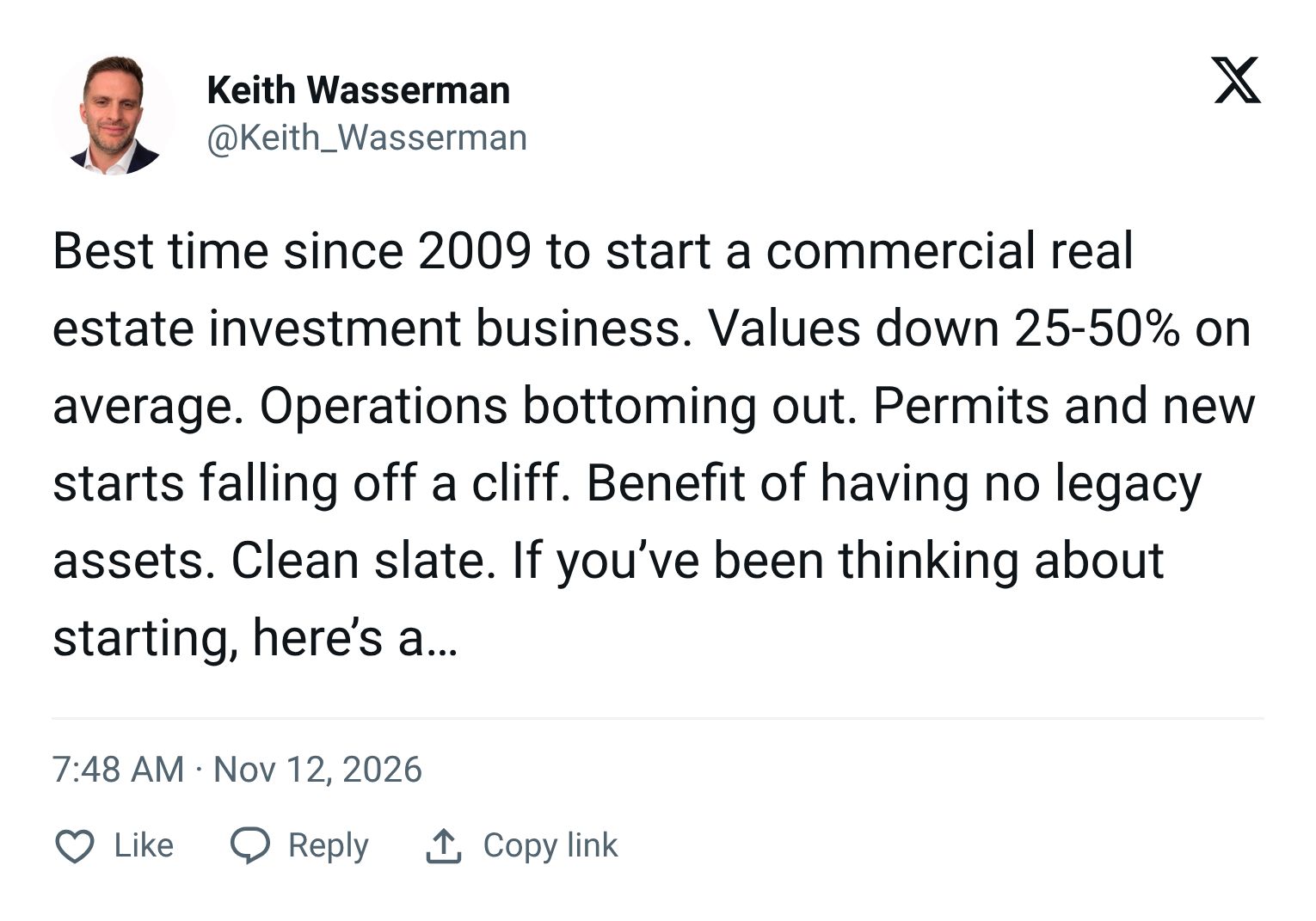
Overheard
Popular Articles


🗣
What real estate topic do you wish got more coverage?
Email [email protected] with a topic, a trend, or a question you keep running into, and we'll cover the best ones.
Please add our newsletter email, [email protected], to your contacts to make sure you don’t miss any updates.
