- Propmodo Daily
- Posts
- From Office Campuses to Affordable Housing, Mass Timber Finds a Market
From Office Campuses to Affordable Housing, Mass Timber Finds a Market

Monday, January 5, 2026
On Tap Today
Hard proof: Mass timber has crossed the line from concept to demonstrated performance in real commercial projects.
Cost contamination: Condo prices and sales are at their weakest point in over ten years as insurance and association costs rise.
Fair and square: How an all-cash $947 million sale of 119 JCPenney stores collapsed at the finish line.
Multifamily outlook webinar: Demand will be steady in 2026, but margins are thinner and execution matters more than ever. Sign up
Development
Mass timber is no longer hovering on the fringe of commercial real estate. After years of being treated as a sustainability experiment or architectural statement, engineered wood is showing up in serious projects across the country, backed by real capital and real risk. What’s changing isn’t just volume, but confidence: developers are no longer asking whether mass timber works, but where it works best.
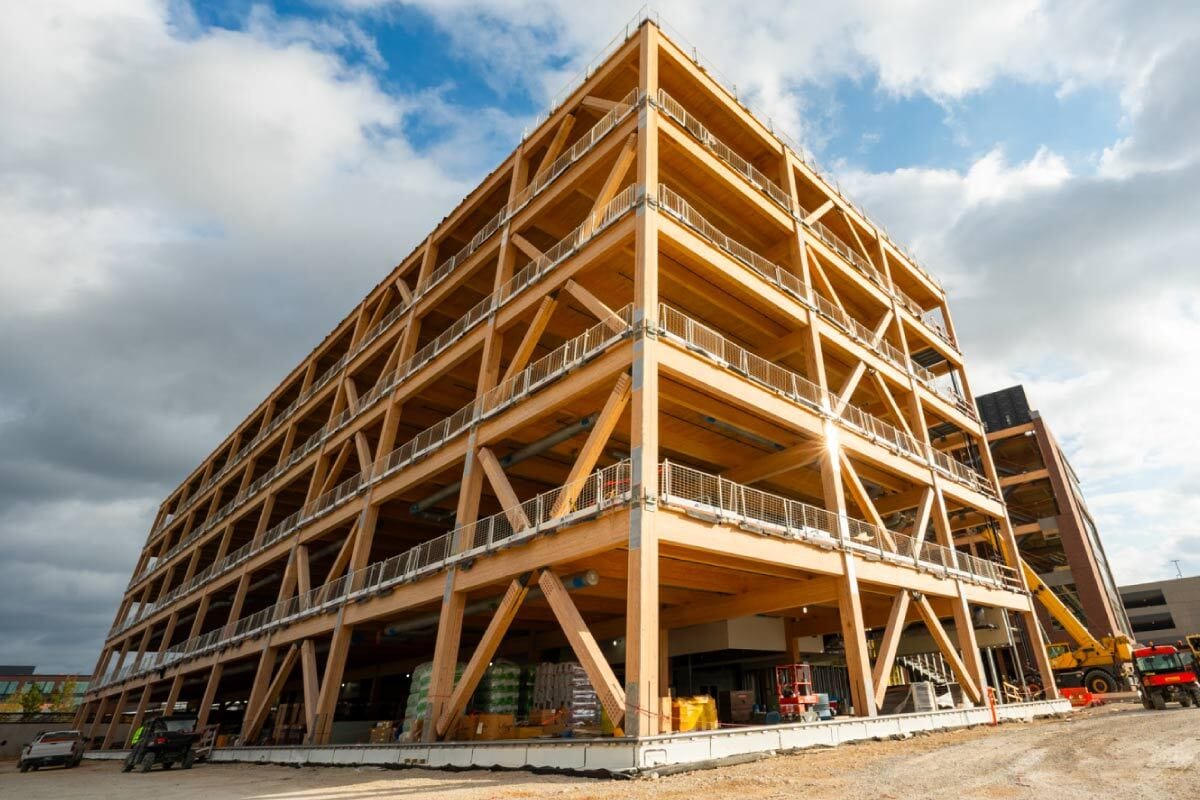
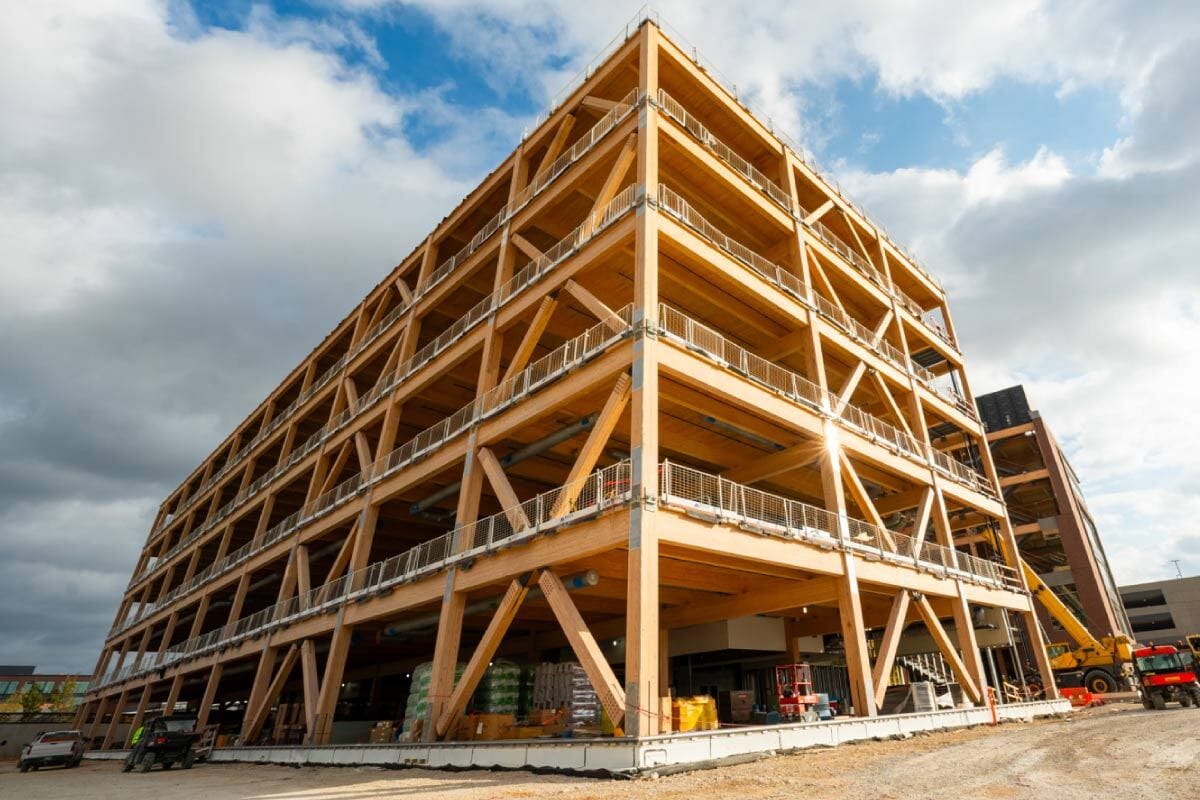
Walmart’s new headquarters campus in Bentonville, Arkansas, is the largest mass timber development in the U.S., built to meet the scale and demands of a global corporation. (Image: Walmart)
At the high end, projects like Walmart’s massive headquarters campus prove timber can support the demands of global corporations at scale. At the same time, ambitious towers like Milwaukee’s Edison reveal the growing pains that come with pushing timber into true high-rise territory, where financing, supply chains, and execution risk tighten quickly. Together, these projects frame the opportunity and the friction shaping mass timber’s next chapter.
The real momentum, though, is building in the middle. Offices, mixed-use districts, affordable housing, and even industrial projects are quietly adopting mass timber as a practical tool to cut schedules, differentiate assets, and manage carbon without blowing up budgets. The result is a material that has moved beyond novelty, but not yet into inevitability—and a market that is learning, project by project, how to build differently at scale.
Overheard

The U.S. condo market is confronting its most pronounced downturn in over a decade, with prices slipping and sales cooling sharply in many metropolitan areas. In late 2025, condo resale prices fell noticeably year-over-year even as single-family home values showed more stability. That divergence reflects a mix of rising ownership costs, aging inventories and uneven buyer demand. Condos that once sold briskly are now sitting longer on the market and frequently trading below their prior sale price, a sign that both end users and investors are rethinking the calculus of urban multifamily living.
A central factor dragging on condos is the ballooning cost of ownership. Many association fees have surged as condo boards grapple with higher insurance premiums, especially in regions prone to natural disasters, and escalating maintenance and capital repair obligations. In some buildings the cost of association assessments plus insurance now adds thousands of dollars per year to the cost of owning a unit, trimming the affordability cushion that once made condos attractive to first-time buyers and young professionals. That cost pressure has been especially acute in older or coastal buildings where structural repairs and higher risk profiles drive fees upward, leaving buyers wary and sellers forced to adjust price expectations downward to compensate.
Looking ahead, the question for investors is whether these costs stabilize or continue climbing. Insurance premiums for multifamily and condo buildings have already risen at double-digit annual rates in several coastal and Sun Belt markets, and industry forecasts suggest elevated catastrophe risk could keep pressure on pricing through the next few policy cycles. At the same time, deferred maintenance from the last decade is colliding with stricter safety standards, meaning capital calls and special assessments are likely to become more common. If HOA fees and insurance continue to outpace wage and rent growth, condos may struggle to regain pricing power, particularly in older urban buildings. That dynamic could suppress values longer than past downturns and push buyers and capital toward newer assets, rental housing, or markets where operating costs are easier to predict.
The planned sale of 119 JCPenney store properties has collapsed after the buyer failed to close by a late-December deadline. Copper Property CTL Pass Through Trust, which controls the assets, terminated the $947 million all-cash deal on Dec. 26, citing the buyer’s failure to complete the transaction on time. The buyer, an affiliate of Onyx Partners Ltd., had agreed to purchase the portfolio earlier this year.
In a filing with the U.S. Securities and Exchange Commission, Copper said it met all closing conditions, while Onyx did not. Copper is holding $2 million of the buyer’s $5 million deposit and is seeking to claim the remaining $3 million from escrow, a move Onyx is contesting through litigation. Onyx has argued Copper breached the agreement, while Copper says it intends to aggressively defend its position. According to CoStar, Onyx indicated prior to the deadline that it was still waiting on tenant documentation from the trust.
The failed transaction underscores how fragile large single-tenant retail portfolio deals remain, even when headline pricing and “all-cash” terms appear solid. Execution risk, documentation disputes, and shifting capital market conditions continue to derail transactions at the finish line. As legacy big-box assets cycle out of bankruptcy-era structures, owners and buyers alike are being forced to reassess valuation assumptions, diligence timelines, and liquidity expectations.
Live Webinar

Popular Articles


Are You Enjoying This Newsletter?
Propmodo Daily is written and edited by Franco Faraudo with contributions from readers like you and the Propmodo team.
📧 Forward it to a friend and suggest they check it out.
🔗 Share a link to this post on social media.
🗣 Have ideas for future topics (or just want to say hello)? Share your feedback and tips at [email protected] or connect with us on X through @propmodo.
✅ Not subscribed yet? Sign up for this newsletter here.
📫️ Please add our newsletter email, [email protected], to your contacts to make sure you don’t miss any updates.
Enjoy reading about trends and innovation in commercial real estate? Subscribe to Propmodo.com for unrestricted access to reliable, data-driven journalism and exclusive insights available only to subscribers.